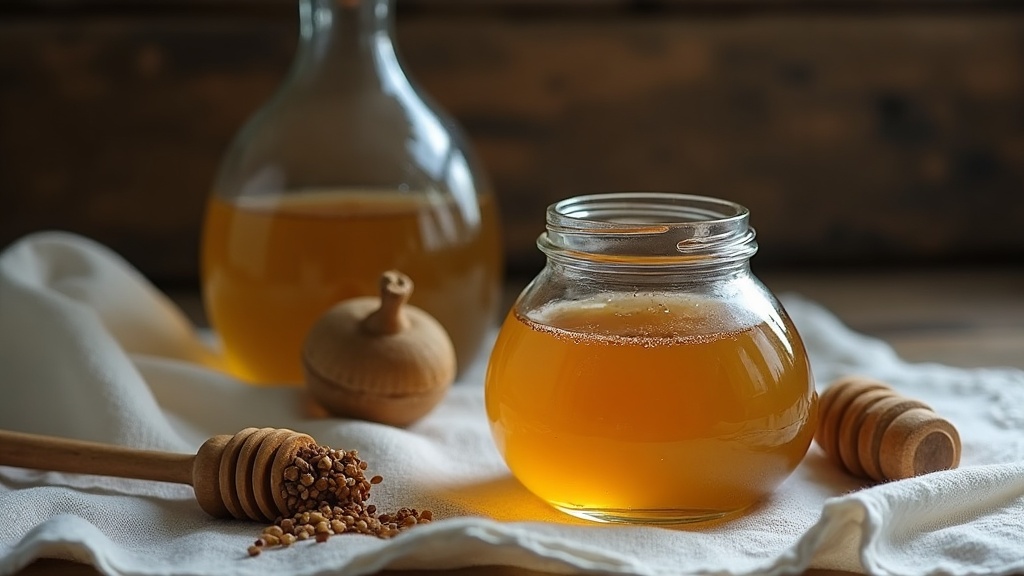
This page is a short walk through history, not a promise. It looks at how Biblical drink (oil)/ Honey blen fit into old-fashioned cooking, alongside the meal habits families leaned on long before nutrition labels or lab reports were part of daily life.
Long before any of this became a personal routine, most people never thought twice about a meal. For many adults today, though, eating has quietly turned into a daily calculation — one plate, one decision, one afternoon slump at a time. Kitchens once ran on habits passed down through generations, and dishes like Biblical drink (oil)/ Honey blen were part of that everyday cooking rhythm, long before anyone measured anything at all.
That heavy, foggy stretch in the early afternoon has become so familiar that many people just plan around it, rescheduling focus-heavy work for the morning instead.
Waking up already worn out, before the day has even begun, is a pattern many adults quietly track but rarely mention to anyone outside their own kitchen.
Is this the right amount of rice, the wrong kind of bread, too much fruit for one sitting? The uncertainty itself can feel more tiring than the meal.
Three meals a day, every day, each one a small negotiation — that ongoing mental load is rarely talked about, though it shapes an enormous amount of daily life.
Family kitchens pass down plenty of food wisdom — some useful, some just repeated so often it sounds true. Here are three common ideas worth looking at plainly.
All carbohydrates are the enemy on the plate.
Carbohydrates are simply one part of a meal; whole grains, legumes, and vegetables have long been staples across nearly every traditional diet in the world.
Fruit should be avoided altogether because it’s sugar.
Whole fruit comes packaged with fiber and water, and it has been part of everyday eating patterns across cultures for centuries, prepared and enjoyed in countless traditional ways.
There’s a special category of ‘diabetic food’ that’s fundamentally different.
Most guidance from health professionals points toward the same balanced, whole-food eating patterns recommended for the general population — not a separate, isolated menu.
None of this is a program or a fix — it’s simply how many households used to structure a meal before convenience food reshaped the plate. These habits are worth discussing with the healthcare professional who already knows your routine, especially if you’re managing any existing condition.
Many traditional households served vegetables or a simple broth before the heavier parts of the meal arrived, a small sequencing habit that shaped the entire pace of eating.
Meals used to stretch across conversation and courses rather than being finished in a few rushed minutes — a pace that today’s fast lunches rarely allow for.
A stroll around the garden or a walk to a neighbor’s house after dinner was simply what people did, long before ‘light movement after meals’ became a phrase in an article.
Long before it had a name fit for a headline, this simple pairing of oil and honey showed up in old-world kitchens as a practical, everyday combination — drizzled over bread, stirred into warm grain dishes, or offered as a small gesture of hospitality at the table. References to oil and honey together appear across ancient texts and traditional Mediterranean cooking, where both ingredients were valued for flavor, for preservation, and for their place in shared meals rather than for any medical purpose. Families kept their own version of the blend, adjusted by what was on hand, and passed the habit down the same way they passed down a recipe for bread or stew.
This is a story about cooking, not chemistry — and it’s worth remembering that no traditional recipe replaces the guidance of the healthcare professional who already follows your care.
If the post-lunch slump has started showing up nearly every day, it's a detail worth mentioning at your next appointment rather than working around quietly.
Noticing you're reaching for water far more than usual, day after day, is something to raise directly with the professional managing your care.
If deciding what to eat has become genuinely stressful rather than routine, that shift is worth discussing with your doctor or a registered dietitian.
Waking tired despite a full night's sleep, on a regular basis, is a pattern best brought to your healthcare provider rather than self-diagnosed.
Any change in how your body responds to minor cuts or irritation deserves a conversation with your doctor, not a guess from an article.
Before adjusting a meal plan, a supplement, or anything connected to an existing treatment, check first with the professional who already oversees your care.
These are individual accounts shared for illustrative purposes only. Experiences vary widely, and none of these reflect a guaranteed or typical outcome. This content does not describe clinical results, medical outcomes, or laboratory changes of any kind.
Nothing here replaces your doctor, your dietitian, or any part of your existing care plan. If you’re curious about the traditional story behind Biblical drink (oil)/ Honey blen and how it once fit into everyday cooking, the short video below walks through it — and any change to your diet or routine should still be discussed with the healthcare professional who knows your history.
Advertising Disclosure: This page contains sponsored content and affiliate links. We may receive compensation if you click on or make a purchase through links on this page. This does not affect the price you pay and helps support the operation of this site.
Content Disclaimer: This content is provided for educational and informational purposes only. It has not been evaluated by the FDA and is not intended to diagnose, treat, cure, or prevent any disease or condition. It is not a substitute for professional medical advice, diagnosis, or treatment. Always consult a qualified healthcare professional before changing your diet, routine, or any prescribed treatment, including medication.
Results Disclaimer: Individual results and experiences vary. Any testimonials or personal accounts shared on this page are not a guarantee of similar outcomes for any other individual.
© 2026 · All Rights Reserved